- A tech pack is a set of instructions that tells a factory exactly what to make: the design, materials, measurements, construction and finishing.
- It also lets you compare quotes fairly, because every factory prices the same specification.
- Motorcycle gear needs extra detail, such as armor pockets, vents, liners and fit in a riding position.
- A first sample can start from a lighter pack. The full production pack comes after fit feedback.
What Is a Tech Pack?
A tech pack, short for technical package, is a document that describes a garment or product in enough detail for someone else to make it. You will also see it called a garment specification sheet, though a spec sheet is usually just one part of a full pack. Fashion designers, apparel brands and motorcycle gear brands all use the same idea, so a tech pack fashion example and a riding-gear pack share the same core pages. An apparel tech pack is the working instruction set between your design and the factory floor.
Tech Pack vs Sketch vs Reference Sample
Each of these gives a factory something different.
- A sketch shows the look but not the materials, measurements or construction.
- A reference sample is a physical example. It shows what you like but not what is inside, and it does not give measurements in the size run you want.
- A tech pack puts the details in writing and drawings, so nobody has to guess.
Many factories can start from a sketch or a reference sample. A tech pack makes the start faster and the result closer to what you pictured.
Why a Clothing Tech Pack Matters
- It limits guesswork. Anything missing from the pack is something the factory has to assume.
- It makes quotes comparable. When every supplier prices the same document, you compare prices and terms, not interpretations.
- It records decisions. Fit changes, material swaps and trim choices stay in one place.
- It keeps production consistent. The same pack is the reference for the first sample and for later orders.
What Goes Into a Tech Pack, Page by Page
The layout varies, but most packs cover the same ground.
Cover Page and Design Sketches
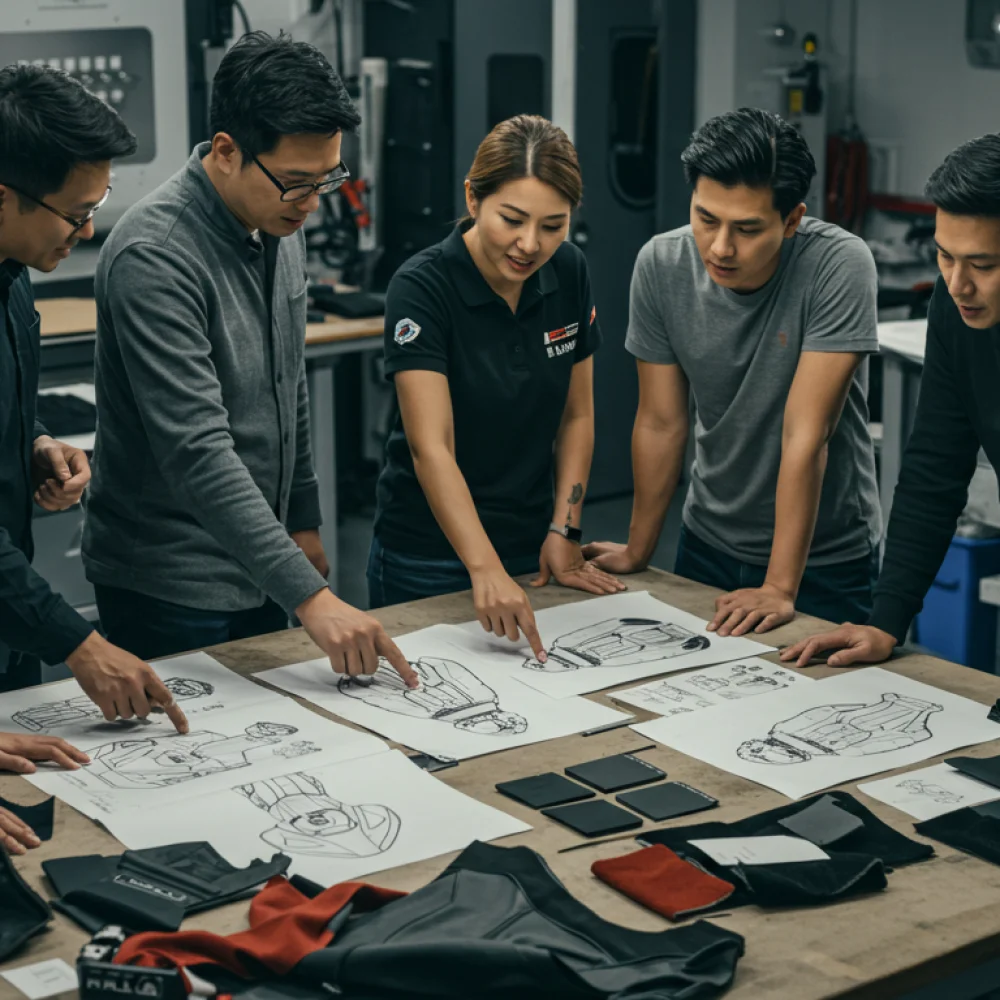
The cover carries the style name, version number, date, season or program, and your contact. Then come technical drawings, called flats, showing the front, back and side views, with callouts that point to key details such as pockets, seams and zips.
Bill of Materials
The bill of materials lists everything that goes into the product: outer fabric, lining, padding, thread, zips, snaps, hook-and-loop closures, armor, labels and packaging. For each item, give the description, color, where it is used and the quantity per garment. A vague entry such as "leather" or "mesh" leaves the factory to choose for you, so be specific.
Construction Details
Stitching and Seams
State how the garment is sewn: stitch types, seam finishes, topstitching and where seams are taped or sealed if that matters to your product.
Reinforcement Points
Mark where stress builds up, such as pocket corners, zip ends and strap anchors, and say how each is reinforced.
Armor Pockets and Vents (Motorcycle Gear)
For riding gear, show the position, size and closure of armor pockets and any vent zips, with a note on whether the armor is removable.
Measurements and the Grading Chart
This page sets out the points of measure for each size, such as chest, length, sleeve and waist, with a base size and the grading chart that explains how measurements change across the size run. Agree the tolerances in writing. If you sell in more than one market, list measurements in both inches and centimeters so nothing is lost in conversion.
Colorways and Artwork
List each colorway with color references, and show logo and print placement, embroidery details and any contrast panels.
Labels, Packaging and Care
Show where each label goes, what it says, and how each unit is folded, bagged and cartoned. Include care instructions and any size-label formats your market expects.
What a Tech Pack Looks Like for Motorcycle Gear
Riding gear carries details that ordinary apparel does not. Add pages or notes for the points below.
Jackets and Pants
Cover armor pocket size and placement, how armor is retained, vent and zip positions, liner attachment, stretch or articulated panels, and reflective trim. Describe how the garment should sit in a riding position, with arms forward and knees bent. If your market needs tested armor or specific materials, state that in the pack so the factory can plan for it.
Gloves
Gloves depend on the pattern. Specify finger lengths, palm and knuckle reinforcement, protector placement, closure type, seam positions and any touchscreen fingertips. For leather gloves, name the leather type and the weight you want. Our leather riding gloves range shows the kinds of constructions brands commonly start from.
Kidney Belts
Belts are simpler in shape but still need detail: width, panel layers, padding, elastic and closure type, and the adjustment range. If you are new to the category, our kidney belt guide explains the main types.
Tech Pack Template: A Checklist You Can Copy
Use this tech pack template as a starting point. Copy it into a document or spreadsheet and fill in each row.
| Page | What to include |
|---|---|
| Cover | Style name, version, date, contact, target market |
| Flats | Front, back and side views with callouts |
| Bill of materials | Fabrics, linings, trims, closures, armor, labels, with colors and quantities |
| Construction | Stitch types, seam finishes, reinforcement, armor pockets, vents |
| Measurements | Points of measure, base size, tolerances, size units |
| Grading chart | Size run and how measurements change by size |
| Colorways | Color references, logo and print placement |
| Labels | Placement, content, care text, size labels |
| Packaging | Folding, bags, cartons, hangtags |
| Revision log | Version, date, change made, who approved it |
First-Sample Pack vs Production Pack
A first sample does not need every page at final detail. A lighter pack with flats, a bill of materials, key measurements and construction notes is often enough to get a sample started, and some factories can begin from a sketch or reference sample. The production pack comes later. It adds the final grading chart, locked materials and colors, finished labels and packaging, and the changes you made after fit feedback. Ask your factory what it needs for each stage.
How to Make a Tech Pack: Step by Step
- Start with a reference. Gather your sketch, a reference sample or a competitor garment you want to match or improve.
- Draw the flats. Show every view and mark the details that matter.
- List the materials. Build the bill of materials, with colors and positions.
- Set the measurements. Choose a base size and record the points of measure.
- Describe construction. Cover stitching, reinforcement, armor and finishing.
- Add colors, labels and packaging. Then review the pack with your factory before sampling.
You can build the pack in a spreadsheet, a document or design software. What matters is that it is clear and the same version goes to everyone.
Fit Feedback and the Revision Log
After the first sample arrives, test the fit in a riding position and write the changes into the pack. Give each version a number, note what changed and keep one current file. A revision log stops old versions from creeping back into production.
Common Tech Pack Mistakes
- Vague materials, such as "leather" with no type, grade or finish
- Measurements without tolerances or a base size
- Missing label placement or care text
- Several versions in circulation at once
- No color references
- Leaving packaging out, then paying for changes late
- Assuming the factory knows your preferences from past orders
Tech Packs by Market
Where you sell changes what the pack must say.
North America
Note the sizing system, label formats and care text your retailers expect, and state whether sizes use inches.
Europe and the UK
List metric measurements and the size-label format used in your market. Gear sold as protective equipment faces specific rules, so mention your target market early.
Asia and the Middle East
Specify whether labels need more than one language, and note climate needs such as ventilation and lighter materials for hot, humid riding.
Australia
Check size-label and care-label conventions for the Australian market, and mention sun, heat and sudden rain if they shape the product.
Rules and conventions change, so confirm requirements for each destination with a compliance adviser.
Starting Your Tech Pack With Province Sports
For brands and dealers, the goal is a pack that gets you a quote and a first sample without a long back-and-forth. Province Sports is a Sialkot-based manufacturer that works with OEM and private label brands, and our prototyping and design consultation team can start from a tech pack, sketch or reference sample. Our quote form accepts a tech pack, pattern file or reference sample as a PDF, Word, Excel, ZIP or image file, up to 15 MB.
To see where the tech pack fits in the wider process, read our private label manufacturing guide, which covers models, samples and ordering, and our look at how gear goes from concept to production. For questions about who owns what, see our guide to OEM, ODM and private label models.
Frequently Asked Questions
What is the difference between a tech pack and a spec sheet?+
A spec sheet usually lists measurements or specifications. A tech pack includes that and adds drawings, the bill of materials, construction details, colors, labels and packaging.
How long should a tech pack be?+
As long as it needs to be to remove guesswork. A simple belt needs fewer pages than a jacket with armor, liners and vents.
Can I send a reference sample instead of a tech pack?+
Many factories can work from a reference sample or a sketch, but the factory will have to assume the details you have not written down. A tech pack reduces that guesswork.
What file format should a tech pack be in?+
PDF is the most common, since it keeps layout fixed. Spreadsheets and documents also work. Keep one master version and send the same file to everyone.
Do I need a separate tech pack for each size and color?+
Usually not. One pack covers the size run through the grading chart and the colorways through the color pages. Make a new pack when the design or construction changes.
Can a factory help me build a tech pack?+
Some factories can help build one from a sketch or reference sample. Ask what is included, and who keeps the finished files.
Final Thoughts
A tech pack is not paperwork for its own sake. It is the shortest route from a design you can picture to a sample you can hold. Start with flats, a bill of materials and measurements, add construction details and colors, and update the pack after every fit review. For motorcycle gear, add the armor, vent and riding-posture details that ordinary apparel packs skip.
If you are preparing one now, send it with your quote request along with your target styles and markets, and we can take it from there.