
- Who designed the product?
- Who owns the pattern?
- Whose name goes on the label?
- Can anyone else buy the same item next season?
Getting those answers wrong is how a brand discovers, after its first order, that it doesn’t own what it thought it owned. This guide explains each model in plain terms and compares them on cost, speed and ownership. It then shows which one suits different kinds of motorcycle gear and apparel buyers, from startup labels in North America and Europe to distributors in the Middle East, Asia and Australia.
OEM vs ODM vs Private Label at a Glance
The short version: OEM means you bring the design. ODM means the factory brings the design. Private label describes whose brand is on the product, not who designed it. A single order can therefore be OEM and private label at the same time, or ODM and private label.
| Comparison Criteria | OEM | ODM | White label |
|---|---|---|---|
| Who designs the product | The brand | The manufacturer | The manufacturer |
| Who usually owns the pattern | Negotiable; agree it in writing | The manufacturer | The manufacturer |
| Exclusive by default | The design, usually | No | No |
| Development cost | Highest | Moderate | Minimal |
| Speed to first order | Slowest | Faster | Fastest |
| Best when | The product is the selling point | Speed or testing matters | The item is generic or a test |
Private label can sit on top of either OEM or ODM production, which is why it isn’t a separate column.
What Is OEM Manufacturing?
OEM stands for original equipment manufacturer. In apparel and motorcycle gear, OEM means the brand supplies the design and the factory develops and produces it. The design can come as a tech pack, drawings, a reference sample or all three.
The factory’s role is still substantial. It turns the design into patterns, grades them across sizes, plans a construction sequence the line can run, and sources the materials and hardware. But the product concept belongs to the brand. That is what makes OEM the route to a product no competitor can order.
OEM suits brands with a clear point of view on fit, materials or features. It takes more sampling rounds and more development cost before the first unit ships.
What Is ODM Manufacturing?
ODM stands for original design manufacturer. Here the factory already has developed styles, and the buyer adapts one. Typical changes are color, materials, trims, branding and sometimes dimensions within limits.
The ODM meaning in manufacturing comes down to this: the pattern exists, the construction is proven, and the early sampling work has already been done. That makes ODM faster and usually cheaper to start. The trade-off is exclusivity. Unless you agree otherwise in writing, the base style stays in the factory’s range and can be offered to other buyers.
What Is Private Label Manufacturing?
Private label manufacturing means a product made by one company is sold under another company’s brand. It describes the branding layer: labels, hangtags, packaging and the brand’s identity on the product.
On its own, private label says nothing about who designed the product or whether it is exclusive. A private label program built on OEM production gives the brand its own design under its own name. One built on ODM production puts the brand’s name on a factory design that others may also sell. Both are common and both are legitimate, as long as the buyer knows which one they’re getting.
White Label and OBM: Two More Terms Worth Knowing
White Label
A white label product is a ready-made item sold largely unchanged to many buyers, each adding their own logo. It is the quickest and cheapest route, but it does little to differentiate a brand.
OBM
OBM stands for original brand manufacturer: a company that designs, produces and sells under its own brand. When people compare OEM vs ODM vs OBM, they are describing a progression in how much of the product and brand a company controls. A brand that sources OEM or ODM production doesn’t become an OBM, because someone else makes the goods.
What Is the Difference Between OEM and ODM?
The difference between OEM and ODM comes down to where the design starts. In OEM vs ODM manufacturing:
- Design origin: OEM starts from the brand’s specification. ODM starts from the factory’s existing style.
- Cost: OEM carries pattern making and several sample rounds up front. ODM moves most of that cost into the past.
- Speed: ODM usually reaches a first order sooner.
- Exclusivity: OEM gives you a design that is yours. ODM gives you a style others can buy unless exclusivity is agreed.
The line can blur. Ask for enough changes to an ODM style, such as a new size range or different construction, and you are effectively paying for OEM development again.
Design Ownership, Pattern and Tooling Ownership
This is where the models really differ, and where misunderstandings are most expensive. Intellectual property rules vary by country, so for valuable designs, take legal advice in your key markets. The practical questions are the same everywhere.
Design Ownership
With OEM, the brand normally owns the design it supplied. With ODM, the base design belongs to the manufacturer, although the brand may own its specific adaptation, such as a unique colorway or artwork. Confirm both in writing.
Pattern and Tooling Ownership
Patterns
A pattern is the factory’s engineering of a design: the set of pieces it cuts from. Owning the design doesn’t automatically mean owning the pattern. Without a written agreement, the pattern often stays with the factory, which affects whether you can move production elsewhere.
Graded Size Sets
Patterns are graded across every size in the range. For motorcycle gear, grading also controls where armor pockets, vents and closures sit on each size. Ask whether the graded set is kept on file for reorders, and whether copies can be released to you.
Digital Files vs Physical Patterns
Many factories hold patterns as digital files as well as card patterns. Agree which form you would receive, if any, and in what file format.
Tooling
Tooling covers items made specifically for your order, such as:
- embossing dies for leather badges;
- molds for rubber or PVC patches and custom hardware;
- screens for printing.
Buyers often pay for tooling while the factory holds it. Agree who owns it and whether it can be released or transferred.
Test Reports and Certificates
For protective motorcycle gear, ask whose name appears on test reports and certificates, and whether they can support your product in your market. Requirements differ between regions such as the EU, the UK, North America and Australia, so confirm this for each market before relying on any document. Our quality assurance and testing page explains how documentation is handled.
Brand Exclusivity: Agree It, Don’t Assume It
Brand exclusivity is never automatic, even under a private label. If it matters to you, define it:
- Which styles are exclusive: the full product, or just your colorway.
- Which markets: for example, North America only, or Europe and the UK.
- How long: one season, a year, or as long as you keep ordering.
- Volume commitment: factories often link exclusivity to minimum annual quantities.
Regional exclusivity is common for distributors, who may want a style protected in their territory while the factory sells it elsewhere.
How the Contract Manufacturing Models Compare on Cost and Speed
All contract manufacturing models share the same production costs: materials, construction, decoration and packing. What differs is development. OEM pays for patterns and sampling before the first unit ships, so an OEM quote can look higher than an ODM one for a similar product. White label has almost no development cost and almost no flexibility.
Development work runs through prototyping and design consultation. The factory-floor stages are shown in our look at how gear moves from concept to production.
Which Model Fits Your Brand?
A useful test: is the product itself your selling point, or is the brand? If buyers choose you for a fit, feature or construction no one else offers, you need OEM. If they choose you for the brand, price and availability, ODM with private label branding will usually get you there faster.
Startup Gear Labels
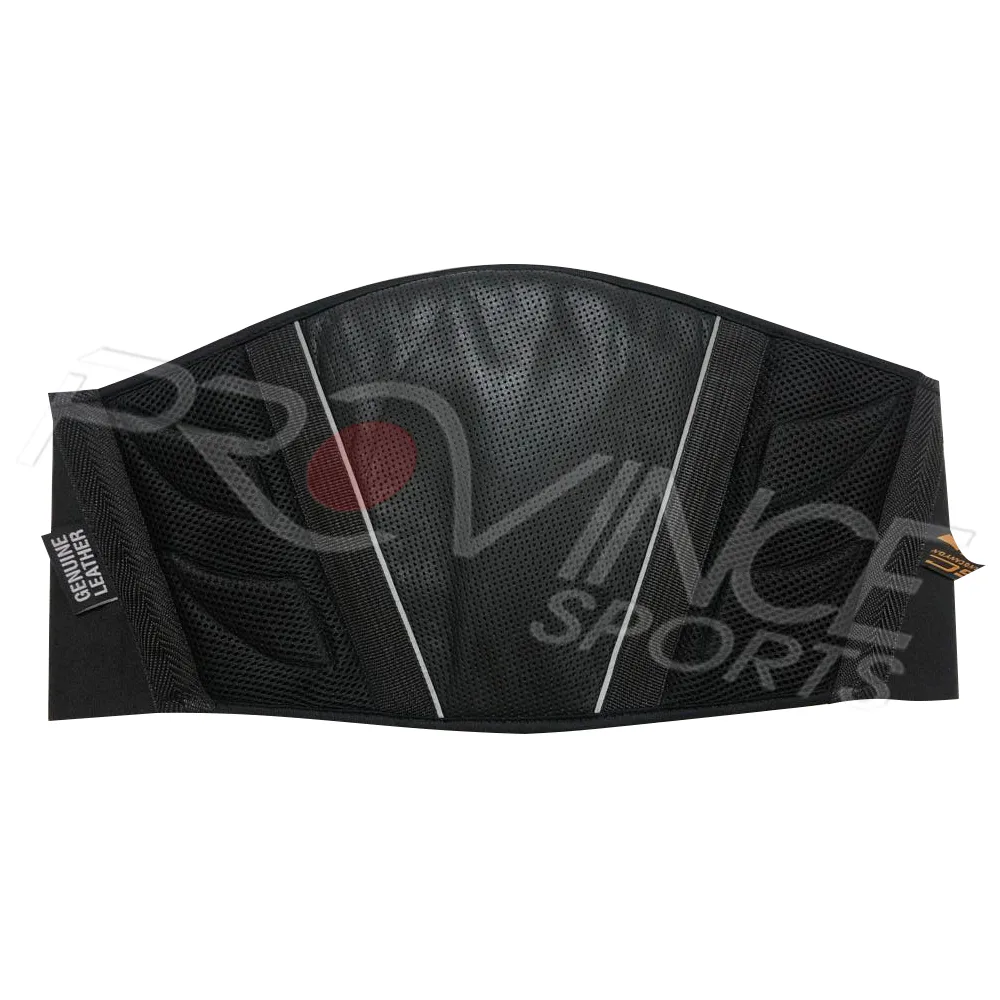
Starting with ODM styles under your own label keeps cost and risk low while you test demand. Accessories such as kidney belts are a common first range. Move best sellers to OEM development once sales justify it.
Established Brands With Design Teams
OEM gives full control over fit, materials and features across protective gear, and it builds a product competitors can’t order. Settle pattern and tooling ownership at the start.
Distributors and Retail Chains
ODM with private label branding builds a broad range quickly. Negotiate regional exclusivity on key styles in your territory.
Dealerships, Clubs and Merchandise Buyers
Branded casual and soft goods and accessories often work well as ODM or white label products with custom decoration, because the brand matters more than a unique design.
Racing Teams
Team gear usually needs OEM development for specific colors, sponsor placements and sizing. If a racing series sets gear requirements, you’ll also need clear answers on documentation.
How Province Sports Works Across the Models
Province Sports is a factory-direct manufacturer in Sialkot, Pakistan. It offers OEM, ODM, private label and white label production across motorcycle protective gear, kidney belts, riding accessories and soft goods. Orders can be built from the buyer’s pattern or from Province Sports’ own styles. Sample sets are provided for approval before bulk orders, and graded patterns are held on file so repeat orders match the original.
To discuss which model fits your range, request a quote. Tell us whether you are bringing a design or adapting an existing style.
Frequently Asked Questions
Can a product be OEM and private label at the same time?+
Yes. OEM describes who designed the product, and private label describes whose brand is on it. A product made to your design and sold under your name is both.
Does ODM mean the factory can sell my product to competitors?+
It can, unless you agree otherwise. The base style usually stays in the factory’s range. Your own colorway, artwork or branding can still be reserved for you if this is agreed in writing.
Can I move from ODM to OEM later?+
Yes, and many brands do. Starting with adapted styles lets you test demand. You can then develop your own versions of the best sellers once volumes justify the development cost.
Is OEM always more expensive than ODM?+
Not always per unit, but OEM carries development costs for patterns and sampling that ODM mostly avoids. Over several reorders, that difference matters less.
Which model is best for motorcycle protective gear?+
It depends on how important the design is to your brand. ODM is a quick way to launch accessories and simpler items. OEM gives the most control over fit, armor placement and features in jackets, pants and gloves.
Final Thoughts
OEM, ODM and private label aren’t competing labels for the same thing. They describe who designs the product, who owns what, and whose brand is on it. Choose the model that matches your stage, your budget and the role the product plays in your brand. Then put design, pattern, tooling and exclusivity terms in writing before development starts. That keeps a first order from turning into a dispute at the second.