This article sets out the real pros and cons of a leather motorcycle kidney belt. It compares leather with mesh, explains what separates a well-made belt from a poor one, and covers which riders it suits. Later sections cover how climate shapes the choice in North America, Europe, the Middle East, Asia and Australia, and what brands, dealers and clubs should specify.
For a wider look at every belt type, see our complete guide to motorcycle kidney belts. If you’re still deciding whether a belt is worth wearing at all, start with whether kidney belts actually work.
What Is a Leather Kidney Belt?
A leather kidney belt is a wide belt worn around the lower torso that uses leather for some or all of its outer body. Leather barely stretches, so most designs combine it with elastic panels or adjustable straps. That lets the belt fit snugly without restricting breathing.
Leather belts generally fall into four construction styles.
Full Leather Belts
The body and strap are leather, fastened with a metal buckle. This is the traditional leather biker kidney belt. It is stiff at first, very classic in appearance, and the least adjustable of the four styles.
Leather-and-Elastic Hybrids
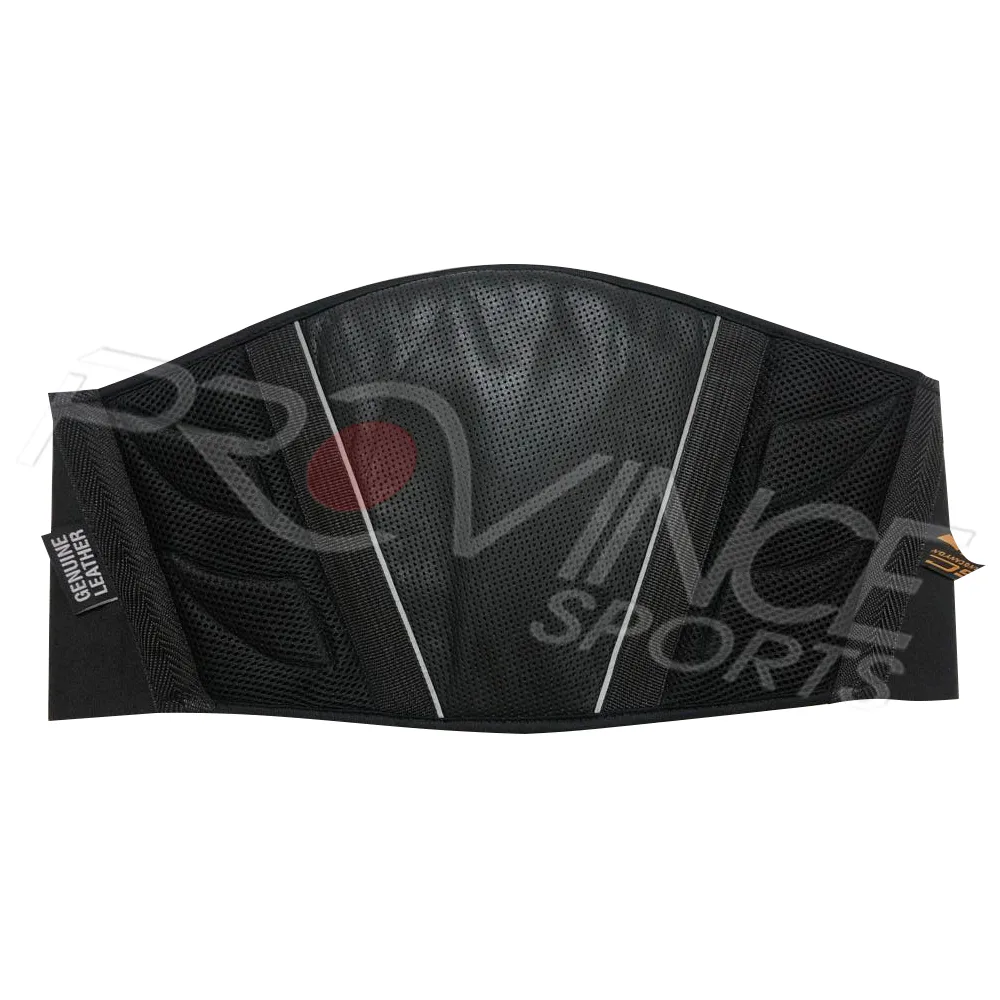
A leather back or front panel is joined to elastic side sections and closed with hook-and-loop or a buckle. This is the most common construction today, because it keeps the leather look while allowing a closer, more adjustable fit. Some, such as a perforated leather kidney belt, are punched to let a little more air through.
Leather-Panel Belts
The main body is textile or mesh, with leather used for trims, reinforcement panels or branding. A leather panel reflective kidney belt is one example: it combines a leather accent with reflective trim on a lighter base.
Leather-Look Belts
These use a synthetic material, usually polyurethane-coated fabric, styled to resemble leather. A leather-look kidney belt costs less, needs less care and handles rain better. It is not genuine leather, though, and shouldn’t be described as such.
Leather Kidney Belt Pros
A Look That Matches Classic Riding Gear
For cruiser riding and classic bikes, leather is often the deciding factor. A leather belt sits naturally alongside leather motorcycle vests, jackets and chaps. Many riders wear it over a vest or jacket as part of the look.
Durable Outer Surface
Good leather holds up well to scuffing and everyday handling, and a well-made belt can last for years while developing character with use. That durability applies to wear and tear only. A kidney belt, leather or not, isn’t crash protection unless the specific product is designed and tested for it.
Wind Blocking and Warmth
Leather stops wind effectively. That makes it comfortable on cool mornings, autumn rides and long highway stretches where cold air reaches the lower back.
Leather Kidney Belt Cons
Limited Breathability
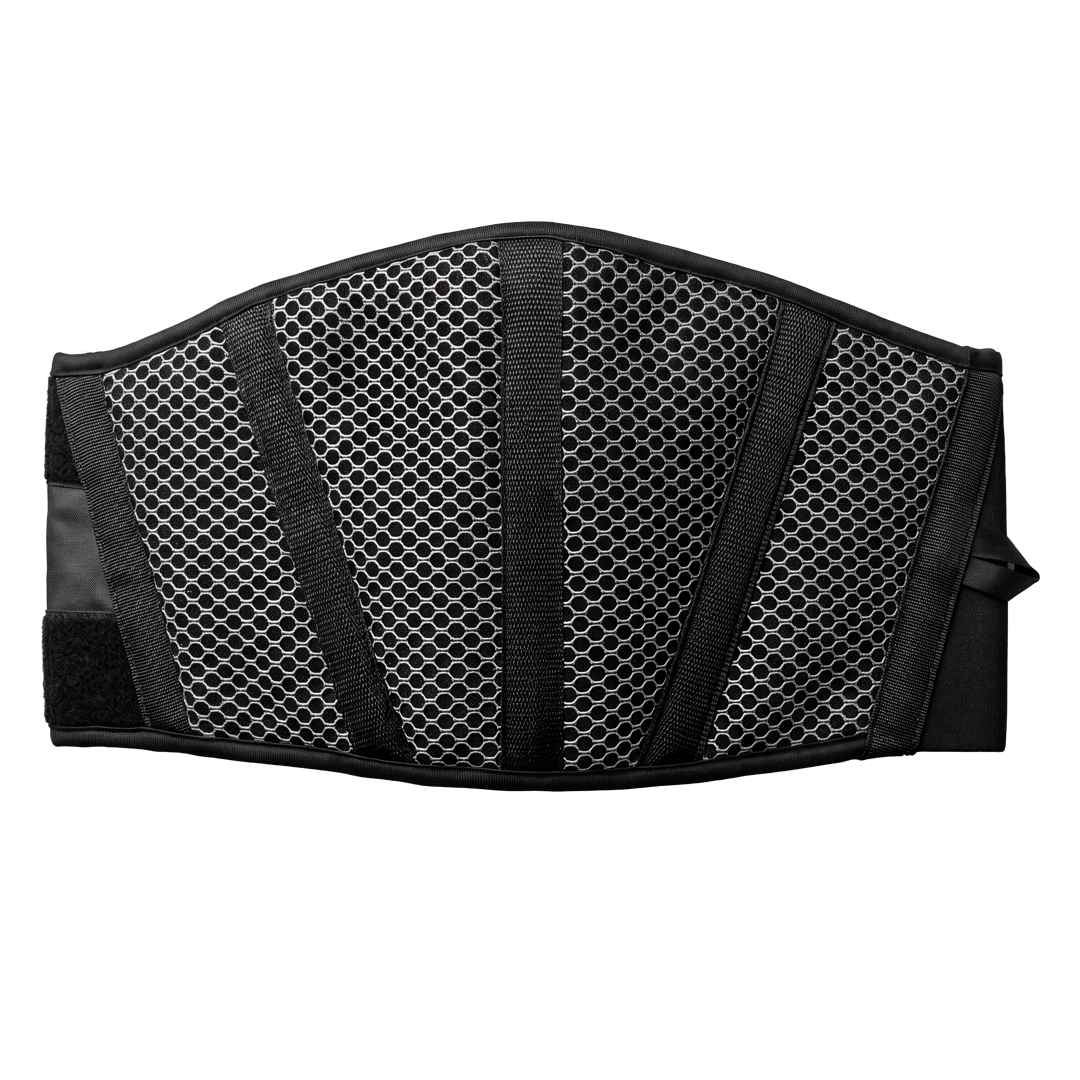
Breathability is leather’s biggest weakness for this product. A belt wraps tightly around a part of the body that sweats easily, and leather lets far less air through than mesh. Perforation helps, but a perforated leather belt still runs warmer than a mesh one.
Heavier and Stiffer at First
Leather is heavier than textile and can feel rigid until it breaks in. Thick leather may dig in at the edges when you’re seated.
Less Forgiving of Moisture
Sweat and rain can stain leather and leave it stiff if it dries badly. A soaked belt should dry slowly at room temperature, away from heaters or direct sun.
More Care and Usually Higher Cost
Leather needs occasional cleaning and conditioning. It also usually costs more than a mesh or textile belt of similar quality.
Leather vs Mesh Kidney Belt
The leather vs mesh kidney belt decision mostly comes down to climate, riding style and how much care you’re willing to give the belt.
| Factor | Leather | Mesh |
|---|---|---|
| Breathability | Low, even when perforated | High |
| Wind blocking | Strong | Low unless lined with a windproof layer |
| Weight | Heavier | Lighter |
| Feel when new | Stiffer, needs breaking in | Flexible from the start |
| Care | Cleaning and conditioning | Usually simple washing; follow the care label |
| Wet weather | Can stain and stiffen | Dries faster |
| Look | Classic, cruiser, heritage | Sport, adventure, technical |
| Best for | Cool-weather cruising and touring | Hot climates, commuting, off-road |
Neither is better overall. Leather wins on look and wind blocking. Mesh wins on airflow, weight and easy care.
What to Look for in a Leather Kidney Belt
There is no single best leather kidney belt, but the better ones get the same few things right.
The Leather Itself
Hide Type
Cowhide
Cowhide is the most common leather for motorcycle gear. It is tough and widely available, though thicker cowhide can feel stiff until it softens.
Goatskin
Goatskin is lighter and more supple. It breaks in faster and feels softer against the body.
Buffalo
Buffalo leather has a heavier, more pronounced grain and a rugged appearance that suits a traditional biker style.
Grain and Finish
Full-Grain vs Top-Grain
Full-grain leather keeps the outer surface of the hide intact, so it shows natural marks and develops a patina. Top-grain leather has its surface lightly sanded and refinished, which gives a more uniform look.
What “Genuine Leather” Means on a Label
“Genuine leather kidney belt” tells you the material is real leather. It doesn’t tell you the grade or quality. For that, look for the hide type, the grain and the thickness, which is usually quoted in millimeters.
Construction Details
The details decide whether a belt stays comfortable. Look for:
- Finished edges, either bound or rolled. Raw cut edges rub when you’re seated.
- Reinforced stitching where the leather joins the elastic and around the closure.
- Quality elastic that recovers its shape rather than going slack after a season.
- A smooth inner lining that reduces chafing and doesn’t absorb as much sweat as bare leather.
- Solid hardware, whether hook-and-loop, buckles or snaps.
Fit and Sizing
Because leather doesn’t stretch, sizing matters more than with a fully elastic belt. Measure your waist at the height where the belt will sit, in inches or centimeters, and use that brand’s own size chart. Check how much adjustment the elastic or straps allow.
Leather Back Support Belt or Riding Accessory?
Some sellers call these products a leather back support belt or a leather lumbar belt. Those names describe the area the belt covers, not medical support. A leather kidney belt is a comfort and riding accessory. Anyone with ongoing back pain should get advice from a healthcare professional rather than relying on a belt.
Leather Kidney Belts by Market and Climate
Leather suits some riding regions far better than others, so buyers supplying several markets often need different materials for each.
North America
Cruiser and club riding has a strong following in the US and Canada, which makes leather a natural fit for dealers and clubs. Climate splits the market. The northern states and Canada have cool riding seasons where leather is comfortable. The Southwest, Texas and Florida suit perforated leather or mesh for much of the year.
UK and Europe
Cool temperatures across the UK and Northern Europe favor leather’s wind blocking, but frequent rain exposes its weakness with moisture. Southern Europe’s hot summers push riders toward mesh.
Middle East and Asia
In hot, humid or desert climates, full leather belts are rarely comfortable for long. Leather-panel, perforated leather or leather-look styles keep the appearance with less heat.
Australia and New Zealand
Australia’s hot north and inland favor mesh. The cooler southern states and New Zealand suit leather for much of the year.
Who Should Buy a Leather Kidney Belt?
Riders It Suits
- Cruiser and classic-bike riders who want gear that matches their leather jackets and vests.
- Touring riders in cooler climates, where wind blocking matters more than airflow.
- Motorcycle clubs and riding groups that want a uniform leather look.
- Riders who prefer gear that ages and are happy to look after it.
Riders Better Off With Mesh or Textile
- Riders in hot or humid climates.
- Off-road, adventure and motocross riders who move constantly and work up a sweat.
- Commuters who want low-maintenance gear.
- Riders who wear their belt under a close-fitting textile jacket, where a thinner belt sits better.
Leather Kidney Belts for Brands, Dealers and Clubs
Where Leather Fits in a Range
In most ranges, mesh and textile belts carry the volume, while leather works as a heritage or premium line. Leather belts make the most sense for:
- cruiser-focused dealers;
- retailers that sell leather jackets and vests;
- club orders where branding matters.
Leather-look belts can cover the same style at a lower price, provided they are clearly labeled as synthetic. Buyers supplying several markets often split the range, with leather for cooler, cruiser-heavy markets and mesh or leather-panel styles for hot ones.
What to Specify Before Sampling
A clear specification avoids surprises at the sample stage. Agree on these points in writing:
- hide type, grain and thickness in millimeters;
- finish and color, remembering that natural hides vary slightly from batch to batch;
- lining, elastic and hardware;
- edge finishing and stitching;
- branding, such as embossed or debossed leather badges, woven labels or patches;
- size range, with size labels in inches and centimeters if you sell in both North America and metric markets;
- packaging.
Approve a sealed sample before bulk production, and use it as the reference for color and finish. Our material expertise and integration team can help you compare leather, leather-look and hybrid options at the specification stage. Labeling rules for leather and leather-alternative products vary by market, so check the requirements for each market you sell into.
Sourcing Leather Kidney Belts From Province Sports
Province Sports is a factory-direct motorcycle gear manufacturer in Sialkot, Pakistan. Its wholesale motorcycle kidney belts include leather and leather-look styles alongside mesh, reflective and windproof belts. All are available for OEM, private label and white label orders. The same factory produces leather vests, jackets and gloves, so buyers can plan a matching leather range and combine categories in one shipment.
To start, request a quote with these details:
- your tech pack or a reference belt;
- your target market;
- your preferred leather.
Ask for samples before committing to bulk.
Frequently Asked Questions
How do you clean a leather kidney belt?+
Wipe it with a damp cloth and use a cleaner made for leather when needed. Apply a leather conditioner occasionally so it doesn’t dry out. Don’t machine wash it, and let it dry naturally away from direct heat. Follow the maker’s care label where one is provided.
Can you wear a leather kidney belt over a jacket?+
Yes. Many cruiser riders wear one over a vest or jacket for the look. Worn under the jacket, it sits closer to the body and blocks wind more effectively. Either way, make sure it doesn’t push any armor out of position.
Will a leather kidney belt stretch over time?+
The leather softens with use but doesn’t stretch much. The elastic sections may slowly lose some tension. Buy for your current measurement rather than expecting the belt to loosen.
Is cowhide or goatskin better for a kidney belt?+
Neither is better outright. Cowhide is tougher and more common but stiffer at first. Goatskin is lighter and more supple. The choice depends on whether you value durability or comfort out of the box more.
Conclusion
A leather kidney belt suits riders who want a classic look and wind protection and who ride mostly in cooler conditions. For heat, off-road riding or low maintenance, mesh is the better fit. Either way, fit and build quality matter more than the material.