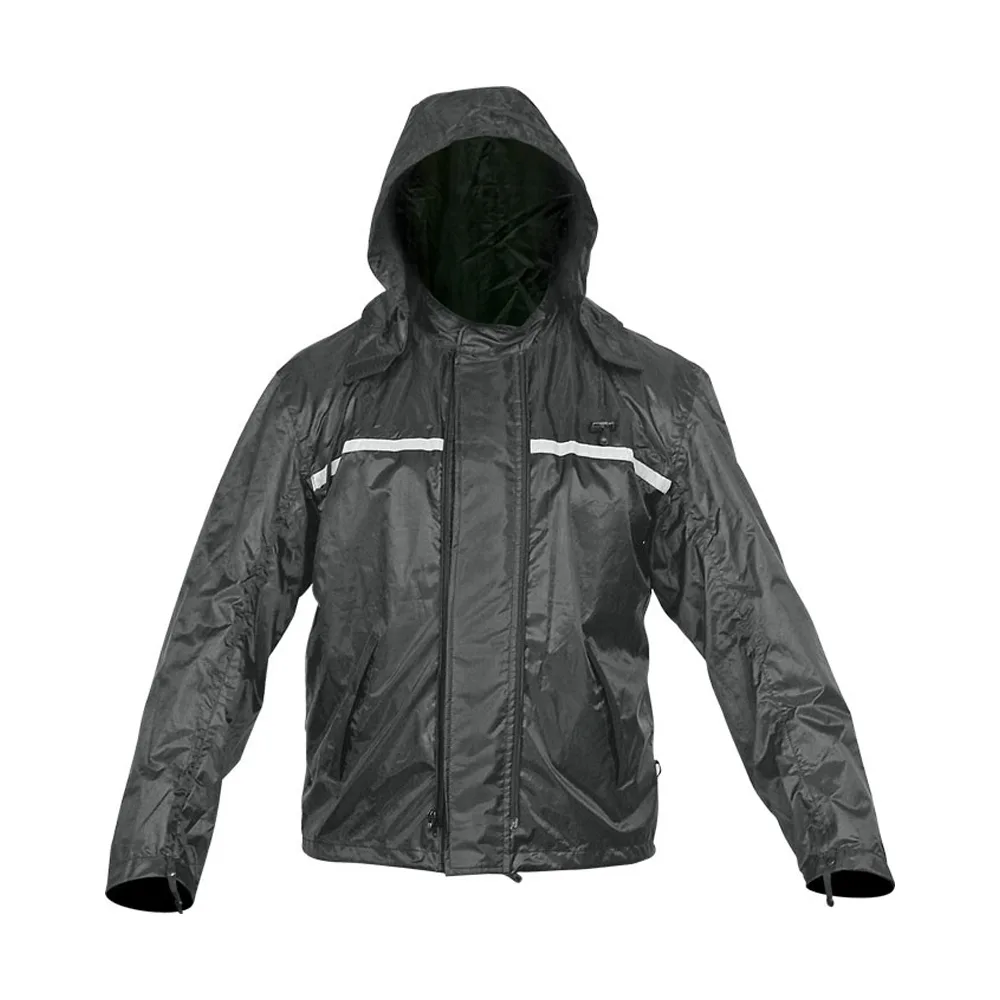
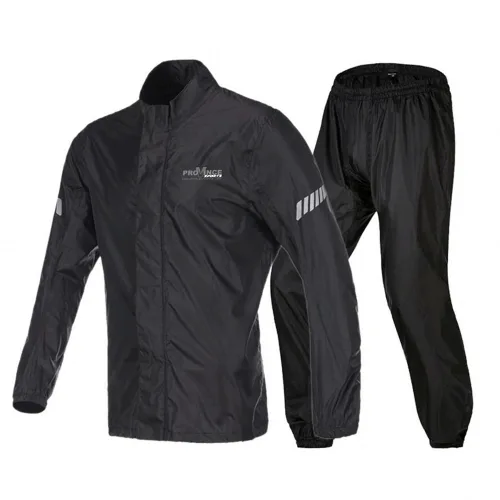
- Rain gear is a waterproof layer worn over your riding gear. Most of it is weather protection, not crash protection.
- Fit comes first. It has to go over your armor, let you reach the bars, and cover your boots when you sit.
- Water usually gets in through openings: the neck, wrists, zip, waist and ankles.
- Choose by how and where you ride. A commuter in humid heat needs different rain gear from a touring rider in cold rain.
What Is Motorcycle Rain Gear?
Motorcycle rain gear is a waterproof outer layer you wear over your normal riding clothes. You will also see it sold as motorcycle rainwear, motorcycle waterproofs, wet weather gear or an oversuit. The idea is simple. Your jacket, armor and boots stay underneath, and the rain gear sheds water on top.
It differs from ordinary outdoor rainwear in how it is cut. Riding gear needs room in the shoulders and arms to reach the bars, a longer back so it does not ride up when you lean forward, and legs long enough to cover your boots while you sit.
Rain Gear Is Not Crash Protection
Most over-gear has no armor and is not built to resist abrasion. Check the product's own information, and keep your protective jacket, trousers, gloves and boots on underneath. Rain gear adds dryness, not protection.
Over-Gear or a Waterproof Riding Jacket?
Many riders choose between a packable layer worn over their gear and a riding jacket that is waterproof on its own. Neither wins every time. It depends on the situation.
| Situation | Over-gear tends to suit | A built-in waterproof riding jacket tends to suit |
|---|---|---|
| Unpredictable showers | You pack it and put it on only when needed | Nothing to put on at the roadside |
| Daily commute | Easy to keep under the seat or in a bag | Nothing to carry |
| Long wet days | Adds a second wind and water barrier over your gear | Can stay comfortable if the construction is good |
| Hot, humid rain | Can feel warm, so you can remove it when the rain eases | Depends on its ventilation |
| Cold rain | Adds an extra layer over your jacket | Needs warm layers underneath |
Many riders end up with both: a waterproof jacket for everyday use and packable over-gear for days when it is not enough.
The Main Types of Motorcycle Rain Gear
Motorcycle Rain Jackets
A motorcycle rain jacket goes over your riding jacket. Look for a high collar that closes snugly at the neck, a storm flap over the zip, adjustable cuffs, and a back long enough to cover your waist when you lean forward. It also needs room across the shoulders for armor.
A hood can help in a heavy downpour, but check that it works with your helmet. A hood that bunches at the neck can make it harder to turn your head.
Motorcycle Rain Pants
Rain pants pull on over your riding trousers and boots. Look for legs long enough to cover the tops of your boots while you are seated, ankle openings that are easy to pull on and adjust, and a waist that stays put. A reinforced seat panel is worth having, since the seat area gets constant rubbing. Wear the legs over your boots, not inside them, so water runs off the outside.
Rain Suits: One-Piece or Two-Piece
A rain suit combines a jacket and pants. A two-piece suit lets you wear the jacket on its own. A one-piece suit has no waist gap but is slower to get on and off. Either can work when it is well made and well fitted.
Packable Emergency Layers and Heavy-Duty Storm Gear
Light packable jackets and pants fold into a pouch for unexpected showers. Heavier gear uses stronger zips, flaps and reinforcement for riders who are out in the rain regularly. Choose by how often you ride in the wet and how much space you have to carry it.
Boot Covers and Glove Covers
Accessories close the gaps at your hands and feet. Boot covers go over your boots, and glove covers go over your gloves. Check that you can still work the clutch, brake and switches with covers on. If your hands get cold as well as wet, the winter hands guide covers gloves and warming options.
How to Choose Motorcycle Rain Gear
Check the Fit Over Your Armor
The best motorcycle rain gear is the gear that fits your kit and your riding. Try it over the jacket, armor and any back protector or airbag vest you actually wear. Good over-armor fit is the first test of any rain gear for motorcycle riding.
- Reach for the bars. Sit on the bike, or on a chair in a riding position. The shoulders and sleeves should not pull tight.
- Lean forward. The back of the jacket should still cover your waist, and the pants should not ride up.
- Look over your shoulder. The collar should not choke you or block your head turn.
- Check your boots. With the pants pulled over your boots and your feet on the pegs, the hems should still cover the boot tops.
Sizing advice online conflicts. Some sellers say to size up, and others say to match your normal riding size. Ignore both rules and test the gear over your own kit.
Know Where Water Gets In
Wet-through complaints often trace back to openings, not fabric. Walk through this list when you try gear on:
- Neck: the gap between the collar and your helmet.
- Wrists: where the sleeve meets the glove. Gauntlet gloves usually go over the sleeve cuff. With shorter gloves, test which order sheds water in your riding position.
- Front zip: a flap over the zip keeps wind-driven rain out.
- Waist: the gap between a jacket and pants, which opens up when you lean forward.
- Seat: sitting presses seams against a wet saddle.
- Ankles: where the pants meet your boots.
- Pockets and vents: make sure they close fully.
Look at Fabric and Construction
Seams and Zips
Every seam is a row of needle holes, so how it is sealed matters.
Taped Seams
Look for taped seams, which have waterproof tape applied over the stitching. Ask whether every seam is taped or only the main ones.
Storm Flaps
A flap behind or over the front zip adds a second barrier against rain driven by wind and speed.
What "Waterproof" Really Means
Waterproof, water-resistant and water-repellent are not the same, and labels use them loosely. Rating numbers are quoted in different ways across brands, and a fabric number does not tell you whether the finished garment will keep you dry. Ask how the garment was made and tested, not just what the fabric is rated for.
Make Yourself Visible
Rain, spray and gray light make riders harder to spot. Bright colors and reflective piping help other road users notice you, especially at dusk. Reflective trim on the sleeves and back adds visibility in low light. It supports your headlight and road position and does not replace them. Province Sports makes a taped-seam rain jacket in fluorescent yellow with a zip front and adjustable waist belt, as one example of a hi-vis style.
Plan for Heat and Ventilation
A fully sealed layer traps sweat in warm rain. Look for ventilation, or plan to take the jacket off when the rain eases. Also keep thin coated fabric clear of hot parts. Exhaust pipes and engine casings can melt or mark it, so watch where your legs sit when you mount, park and ride.
Small Features That Matter
- Adjustable cuffs and hems that stop flapping at speed
- Zip pulls you can work with gloves on
- A carry pouch so it packs small
- Pockets that close
- Reflective trim
Choosing Motorcycle Rain Gear by Climate and Region
North America
Temperatures range from hot summer storms to cold rain in the north. In cold rain, rain gear is one layer in a system. Pair it with warm layers underneath, as the winter motorcycle gear guide and the layering guide explain.
Europe and the UK
Damp weather can last all day, and many riders commute in it. Over-gear suits people who wear their riding jacket to work. Those who ride wet most days may prefer a waterproof jacket underneath too.
Asia and the Middle East
Monsoon rain arrives in humid heat, so ventilation and quick on-and-off matter more than insulation. In much of the Middle East, rain is occasional but can arrive suddenly. A light packable layer that lives in the bag is often the practical answer.
Australia
Conditions range from tropical downpours in the north to cooler, wetter weather in the south, and storms can build fast. Packable gear and good visibility suit most riders there.
Using and Caring for Your Rain Gear
- Put it on early. Stop before the rain gets heavy, not after you are wet.
- Pack it where you can reach it. A rain layer buried under luggage does not get used.
- Dry it properly. Hang it at room temperature and away from heaters and direct heat.
- Wash by the label. Follow the care instructions, and check seams and zips from time to time.
- Carry a small wet-day kit. Spare gloves in a sealed bag and a dry bag for belongings make a rainy commute easier.
Rain Gear for Brands, Dealers and Distributors
Returns on rain gear tend to come from leaks and poor fit. If you are building or stocking a range, decide the use cases first: packable, everyday, heavy-duty touring or accessories. Then specify the details that decide performance:
- Construction: seam taping plan, zip type, storm flaps and closures
- Fit: size run, over-armor allowance, and back and leg lengths, tested over real armored jackets
- Visibility: colors and where the reflective trim sits
- Packaging: carry pouch, hangtags and care labels
- Claims: wording that matches what a sample can show. Water-test samples in a riding position before you approve them.
- Destination market: if you sell gear for protective use, local rules apply. Describe over-gear as weather protection unless it has been tested for more.
Province Sports is a Sialkot-based manufacturer that makes rain jackets, pants and suits for OEM and private label programs. Our rain gear range shows the current styles. If you want to develop your own, our prototyping and design consultation team can start from a tech pack, sketch or reference sample. For how the programs work, read our guides to OEM, ODM and private label models and private label manufacturing.
Ready to build or expand a rain range? Request a quote.
Frequently Asked Questions
Should rain gear go over or under my riding jacket?+
Over. Your protective jacket and armor stay underneath, and the rain layer goes on top to shed water. That is why rain gear needs a roomier cut than ordinary rainwear.
Can I use a regular rain jacket or poncho on a motorcycle?+
It is not ideal. Everyday rainwear is not cut for a riding position, so sleeves and hems can ride up, and loose material can flap at speed.
How should rain pants fit with my boots?+
Pull the legs over the tops of your boots, not inside them, so water runs off the outside. Check that the hems still cover the boot tops when you sit with your feet on the pegs.
Why does my rain gear leak?+
Often it is the openings: the neck, wrists, zip, waist or ankles. Poor fit can also open gaps when you lean forward. Check those points first, and look at the seams and zips for wear.
Can I wear rain gear in hot weather?+
Yes, but a sealed layer can feel warm and trap sweat. Look for ventilation, or take the jacket off when the rain eases. In humid climates, packable gear that is quick to put on and remove is often the easiest choice.
Final Thoughts
Good motorcycle rain gear is less about one standout feature and more about how everything works together: a cut that fits over your armor, openings that seal, visibility that helps others see you, and a style that suits your climate and routine. Try it on in a riding position, check the gaps and ask how it was built and tested.
For brands and dealers, the same ideas guide the spec. Get the fit, construction and claims right, and a range should see fewer returns and more repeat buyers. If you want to develop or expand one, send us your target styles and markets with your quote request.